
What Is a Film Fixer? The Complete Guide to Production Fixers
Everything international productions need to know about film fixers — what they do, when you need one, and how they make filming abroad possible
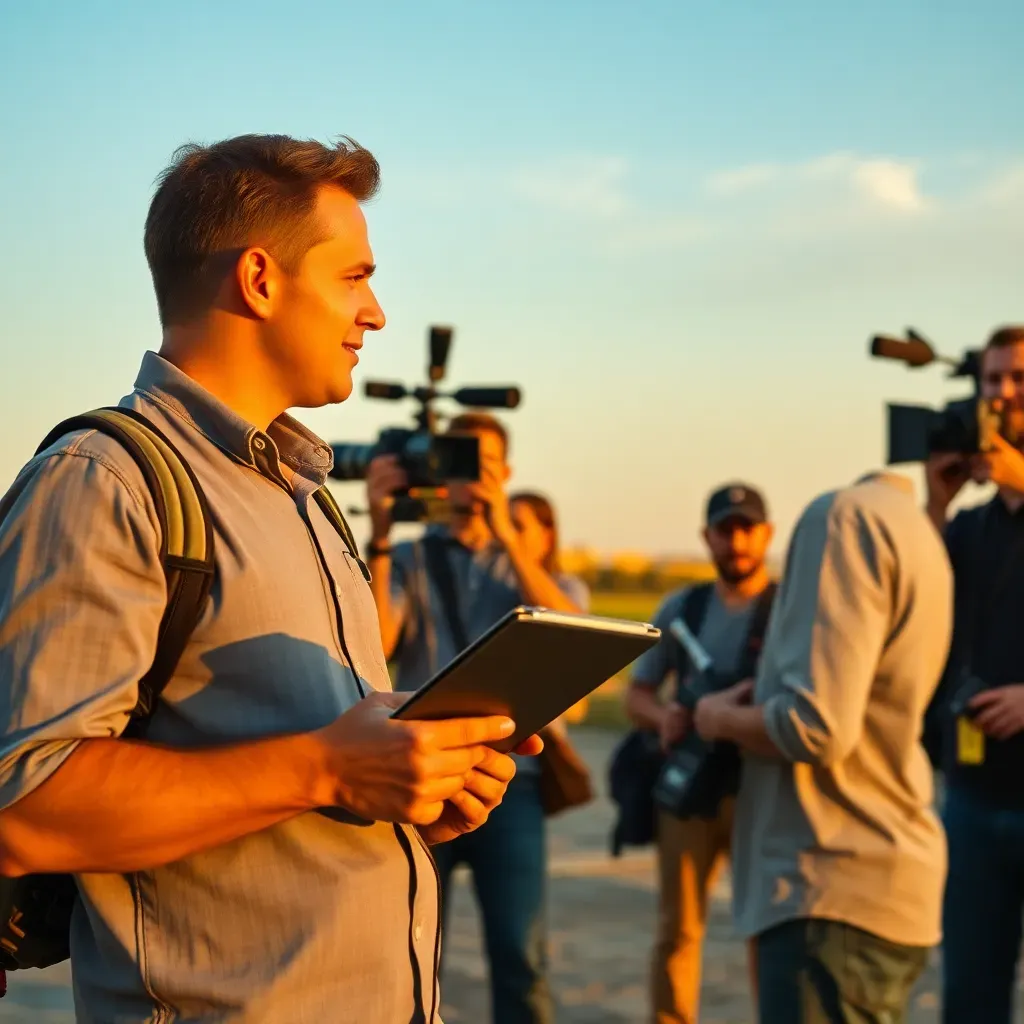
If you've ever watched a behind-the-scenes documentary about an international film production, you've seen fixers at work — even if their title never appeared on screen. Fixers are the people who make filming in foreign countries actually possible. They handle the logistics, navigate local bureaucracy, find crews and equipment, solve problems before they become crises, and bridge the cultural gap between international production companies and local communities. The term 'fixer' originated in journalism, where foreign correspondents relied on local contacts to arrange interviews, navigate unfamiliar cities, and translate not just language but cultural context. The film industry adopted the concept and expanded it significantly. Today, a film fixer — sometimes called a production fixer, local fixer, or production service provider — is an essential member of any international production team. This guide explains exactly what fixers do, when you need one, and how to work with them effectively.
33+ countries covered · 500+ productions supported · 24/7 on-call support
What Exactly Is a Film Fixer?
The Local Expert Who Makes International Productions Work
A film fixer is a local production expert who specialises in arranging for overseas film, television and media producers to film on location within that fixer’s country or region. A film fixer facilitates communication and coordinates on behalf of the visiting Production Company with local government, relevant stakeholders, and support companies such as hotel chains, caterers, vehicle rental companies and others. They can also assist Production Managers in obtaining necessary local clearances, coordinate logistical support, and negotiate fair local fees for location access and support.
- ● Fixers have deep local knowledge of locations, regulations, crews, and equipment
- ● They act as the production's local representative with authorities and vendors
- ● Most fixers speak multiple languages and understand both local and international production standards
- ● The role ranges from a single point of contact to a full production service company
The Origin of the Term
The word 'fixer' comes from journalism, where reporters working in unfamiliar territories needed local contacts who could 'fix' logistical problems — arranging transport, finding interview subjects, navigating checkpoints, and translating conversations. When film productions began shooting internationally in greater numbers during the 1990s and 2000s, they adopted the same concept. A journalist's fixer might arrange a single interview; a film fixer coordinates weeks or months of complex production logistics. The core principle remains identical: someone who knows the local terrain, speaks the language, and can solve problems that would stall outsiders for days.
Fixer vs Production Service Company
The terms overlap but aren't identical. An individual fixer might be a freelancer who provides coordination services — a single experienced local who handles logistics, translations, and problem-solving. A production service company (PSC) is a registered business that provides comprehensive services: crew hiring, equipment rental, accounting, insurance, permits, and more. Many fixers have evolved into PSCs as the international production industry has grown. When people search for a 'fixer,' they often need the full-service approach that a PSC provides. Our company operates as a production service provider with local fixer expertise in every country we cover.
What Makes a Good Fixer
The best fixers combine several qualities that are difficult to find in a single person: deep local knowledge, multilingual communication skills, production experience, problem-solving ability under pressure, and a vast network of contacts across government, industry, and community. They understand both local customs and international production standards. They know when to push and when to negotiate. They can read a shooting schedule and anticipate problems before they materialize. Experience matters enormously — a fixer who has coordinated 200 productions knows shortcuts and solutions that a newcomer simply cannot replicate.
What Does a Film Fixer Actually Do?
From Pre-Production Research to Wrap Day Logistics
A fixer's responsibilities span the entire production lifecycle. Here's what they handle at each stage, from the first inquiry email to the final equipment return.
- ● Pre-production: location scouting, permits, crew sourcing, equipment arrangements
- ● Production: on-set coordination, real-time problem solving, local liaison
- ● Post-production: facility recommendations, archive footage sourcing, final logistics
- ● Administrative: budgeting, accounting, insurance, customs, and legal compliance
Pre-Production Support
Before cameras roll, fixers handle the groundwork that determines whether a shoot succeeds or fails. This starts with location research — not just finding beautiful spots, but identifying locations that are practically filmable, permit-friendly, and logistically accessible. They research and apply for filming permits through local authorities, which often involves navigating bureaucratic processes that differ by city, region, and location type. They source local crew members matched to the production's technical requirements and budget. They arrange equipment rental from trusted local vendors, organize transportation and accommodation, and build detailed budgets that account for local costs international producers wouldn't anticipate.
On-Set Production Support
During filming, the fixer becomes the production's local problem-solver and point of contact. They liaise with authorities, manage relationships with location owners and neighbors, coordinate local crew, handle unexpected challenges — from sudden weather changes to equipment failures to permit complications that arise mid-shoot. They translate not just language but context: explaining local customs to the director, communicating production needs to local vendors, and ensuring cultural sensitivity in every interaction. On documentary and news productions, fixers often arrange interviews, identify contributors, and provide essential context about local issues.
Administrative and Legal Compliance
International productions face complex administrative requirements that vary by country: work permits for crew, equipment customs declarations, local tax compliance, insurance requirements, union regulations, and financial reporting. Fixers handle or coordinate all of these, working with local accountants, lawyers, and government offices. They ensure productions comply with local employment law when hiring crew, manage customs paperwork for imported equipment (carnet de passage or temporary import permits), and maintain the documentation trail that international co-productions and tax incentive programs require.
When Do You Need a Film Fixer?
Types of Productions That Benefit Most
Whilst not every production requires a fixer, most productions shooting abroad will at some point require one. The real question is where do you look?'t whether a fixer adds value — it's whether the cost of not having one exceeds the cost of hiring one.
- ● Any production filming in a country where the team doesn't speak the local language
- ● Productions requiring filming permits from local government authorities
- ● Shoots that need local crew, equipment, or location access
- ● Time-sensitive productions where delays cost more than fixer fees
Feature Films and TV Series
Large-scale productions shooting internationally almost always work with local fixers or production service companies. The logistics of moving 50-200 crew members into a foreign country, securing multiple locations, hiring local support crew, and managing a complex schedule across unfamiliar territory require local expertise. Feature films often work with fixers for months during pre-production before a single frame is shot. TV series shooting international episodes typically engage fixers for concentrated 2-4 week periods. The cost of a fixer on a feature film budget is minimal compared to the cost of a single lost shooting day.
Documentaries and Factual Programming
Documentary productions rely on fixers perhaps more than any other format. Beyond logistics, documentary fixers provide editorial value: identifying interview subjects, understanding the cultural and political context of stories, arranging access to communities and locations that would be impossible for outsiders alone, and advising on sensitivity issues. A good documentary fixer doesn't just get you to the right place — they help you understand what you're filming and why it matters locally. For investigative documentaries, fixers navigate security considerations and provide essential local intelligence.
Commercials and Brand Content
Commercial productions face tight deadlines, strict creative briefs, and demanding clients. Fixers streamline the process by providing pre-vetted location options, reliable local crew, and efficient permit processing. For commercials shooting in multiple countries — common for global brand campaigns — fixers in each territory coordinate to ensure consistent quality and schedule alignment. The commercial world values speed and reliability above all; an experienced fixer who has delivered on similar briefs before reduces risk dramatically.
News and Current Affairs
News fixers operate at the fastest pace and under the most unpredictable conditions. They arrange last-minute access, coordinate rapid crew deployment, navigate security situations, and provide the local context that journalists need to report accurately. News fixing often involves working in challenging environments — conflict zones, disaster areas, or politically sensitive regions — where local knowledge isn't just convenient but essential for crew safety. The best news fixers maintain contacts across government, military, civil society, and local communities.
How to Work with a Film Fixer Effectively
Getting the Most from Your Local Production Partner
The relationship between a production and its fixer works best when it's treated as a genuine partnership. Here's how to set up that relationship for success from the first conversation.
- ● Share comprehensive project information early — scripts, schedules, budgets, creative references
- ● Establish clear communication channels and response time expectations
- ● Trust local expertise on logistics, customs, and regulatory matters
- ● Include fixers in creative conversations where local knowledge adds value
The Initial Brief
Start by sharing everything your fixer needs to give you accurate information and costs: project overview, format and duration, shooting dates, crew size, equipment requirements, location ideas, budget parameters, and any specific challenges you anticipate. The more detail you provide upfront, the more accurate and useful the fixer's response will be. Vague briefs lead to vague quotes — and surprises on set. Good fixers will ask detailed follow-up questions; this is a positive sign that they're planning properly rather than guessing.
Budget and Expectations
Fixer fees vary by country, production scale, and service scope. Some fixers charge day rates; others quote project fees for defined scopes of work. Production service companies typically provide itemized budgets covering crew, equipment, permits, transport, and their service fee. Be transparent about your budget constraints — experienced fixers can often suggest creative alternatives that deliver results within tighter budgets. What they can't do is work with unrealistic expectations about local costs. Trust their market knowledge on pricing; they're not inflating numbers, they're reflecting what things actually cost locally.
Communication During Production
Establish how you'll communicate before, during, and after the shoot. Time zones, language preferences, reporting frequency, and emergency protocols should all be agreed upfront. During production, daily wrap reports from your fixer keep stakeholders informed and create a paper trail for production accounting. Post-production, maintain the relationship — the best fixers become long-term production partners for return visits and referrals to their network in neighboring countries.
How Much Does a Film Fixer Cost?
Understanding Fixer Fees and Production Budgets
Fixer costs depend on the scope of services, duration, country, and production complexity. Here's what to expect and how to evaluate whether the investment makes sense for your production.
- ● Day rates for individual fixers typically range from $300-$1,000 depending on country and experience
- ● Production service companies charge project fees that include all local coordination
- ● Full-service PSC fees typically represent 10-15% of total local production spend
- ● The cost of NOT having a fixer — delays, permit issues, cultural misunderstandings — usually exceeds fixer fees significantly
Individual Fixer vs Full-Service PSC
An individual fixer charging a day rate works best for small productions — a documentary crew of 3-5 people shooting for a few days, or a journalist needing local support for a specific story. For anything larger, a production service company provides better value because they bundle coordination, crew hiring, equipment sourcing, and production management into a single relationship. Comparing a fixer's $500 day rate to a PSC's $15,000 project fee isn't apples-to-apples; the PSC is replacing multiple roles you'd otherwise need to fill separately.
What's Included in Fixer Fees
Legitimate fixer fees should cover: pre-production research and planning time, permit applications and coordination, on-set coordination during shooting days, local phone and communication costs, transportation for scouting and coordination, and post-production wrap logistics. Equipment rental, crew wages, location fees, and other third-party costs are typically separate line items that the fixer arranges and manages but doesn't mark up excessively. Ask for itemized budgets and don't hesitate to question costs you don't understand — transparent fixers welcome budget discussions.
Common Questions
What is a film fixer?
A film fixer is a local production professional who assists on location management for international film, television and media productions. They undertake the day to day logistics of filming on location, source the necessary local permits and production licenses, find the required local crew and equipment for hire, translate scripts for localised shoot requirements and introduce production teams to key officials within local government. The term fixer was originally used to describe individuals who assisted journalists when they were working abroad. As more and more international film productions have been filming in an increasing number of countries, there is a growing need for professional film fixers.
What does a film fixer do on set?
During filming, a fixer serves as the production's local problem-solver and point of contact. They liaise with local authorities and location owners, coordinate local crew, handle unexpected challenges from weather to equipment issues, translate language and cultural context, and ensure the production operates within local laws and customs. They're the person who makes things happen when obstacles arise.
How much does it cost to hire a film fixer?
Individual fixers can be engaged on a day rate basis, typically starting at around $300 per day rising from there depending on the fixer, the country they are based in and the skills and experience they bring to the job. Production service companies charge for their services on a project basis, and will typically include location scouts, pre production meetings, casting, all the paperwork involved in setting up a shoot in a foreign country, and on set support. The service company fee for this full service is typically around 10-15% of the total local cost of production and can vary greatly depending on the scale of the production and the services that the company offer. While individual fixer rates can be seen as poor value for the enormous problems they can prevent for a production, for most productions the cost of employing a production service company is well justified.
When do I need a film fixer?
You need a fixer whenever you're filming in a location where your team lacks local knowledge — particularly if you don't speak the local language, need filming permits, require local crew or equipment, or are working under tight deadlines. Feature films, documentaries, commercials, and news productions all regularly use fixers for international shoots.
What's the difference between a fixer and a production service company?
A fixer (short for fixer upper) is a freelancer, registered or not, who assists film or television production with coordination and local knowledge. A production service company (PSC) is a registered company that can offer a complete service to international production companies. Many fixers have become production service companies. For small documentary crews an individual fixer is fine, but for bigger productions you need a PSC.
How do I find a reliable film fixer?
We get our fixers through word of mouth from other production companies, film commissions and industry organisation websites. All our fixers have to have relevant production credits to the main shoot element of your production, proof of local business registration and full production insurance. Where possible we like them to have industry references too. We consider applications from fixers who meet these criteria. Please do not apply via this website if you don’t meet the above criteria.Look for fixers who can provide a clear contract and itemized budget. Our network covers 33+ countries with vetted production professionals in each territory.
Related Services
Need a Film Fixer?
Whether you're planning a documentary shoot, feature film, commercial campaign, or news coverage, our team provides comprehensive fixer and production services across 33+ countries. We handle permits, crew, equipment, logistics, and everything else you need to film abroad.